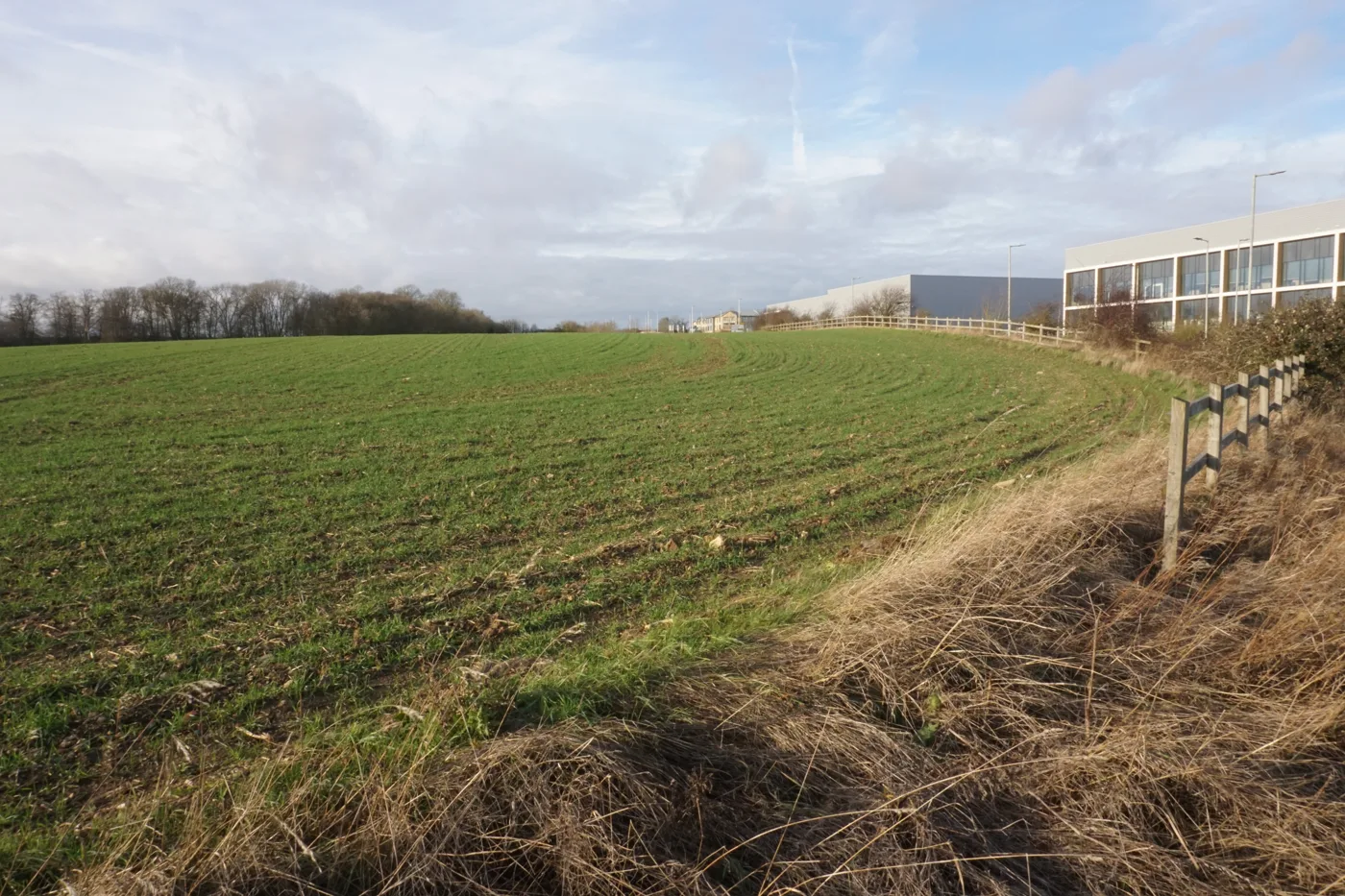
Landowners get a second chance to offer fields for housing, 15 October to 26 November, after the new NPPF opened up Green Belt near stations. 283 came in 2024.
Landowners across East Herts are to be given a second chance to offer their land for development, and the reason is written plainly into the council’s own report: the rules on building in the Green Belt changed last month.
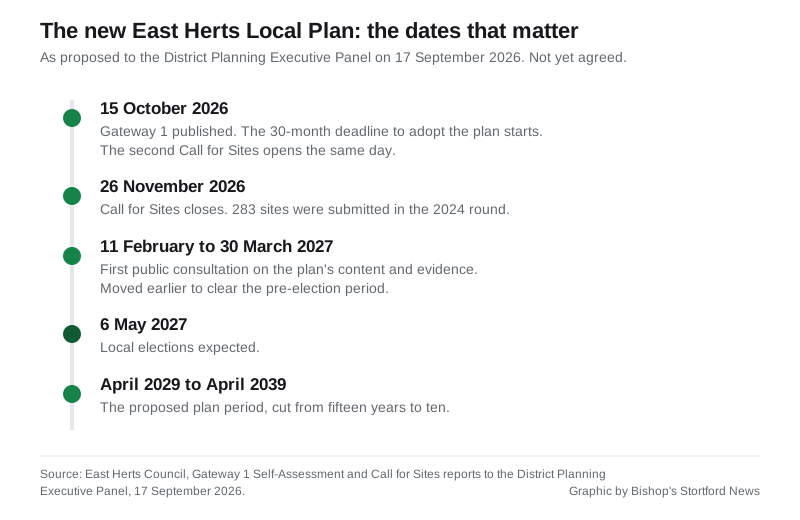
East Herts Council wants to run a second Call for Sites from Thursday 15 October to Thursday 26 November 2026. The proposal goes to the District Planning Executive Panel on Thursday 17 September, which meets at 7pm in the Council Chamber at Wallfields, Hertford.
A Call for Sites is the stage where landowners, developers, agents and site promoters put forward parcels of land for the council to assess. The first one ran from 5 July to 30 September 2024 and produced 283 site submissions, according to the report by Cllr Maura Connolly, the Executive Member for Planning and Growth. Those are still being worked through.
Why the council is asking again
The report gives four reasons, and the first is the new National Planning Policy Framework published in August 2026:
- Green Belt near railway stations. The report singles out NPPF policies “S5: Principle of development outside settlements” and “GB7: Development which is not inappropriate in the Green Belt”, “where they relate to land around well-connected railway stations”. That, it says, “could present some landowners and/or site promoters with the prospect of submitting land proposals that they may not have previously considered entering for consideration in 2024”.
- Grey belt. The council has agreed a Green Belt Assessment covering East Herts, North Herts and Stevenage. It identifies land that performs less effectively against the purposes of Green Belt, which the report describes as “sequentially preferable where Green Belt is required to meet development needs”.
- Brownfield land. NPPF policy L1 says plans will be “tested robustly” at examination on how much previously developed land they use and on minimum densities. A second call lets the council look for brownfield sites it has not yet been offered.
- Landowners who missed the first round. Several have approached the council since 2024 and could not be accepted through the closed process.
Sites already submitted in 2024 should not be entered again. The report says that would be “expressly ruled out”, unless the proposal has changed significantly, for example a change of land use.
What happens to a site once it is submitted
Submissions feed into a Strategic Land Availability Assessment, a technical report that lists each site with an Ordnance Survey map and judges how likely it is to be built on. The council is blunt about the limits of that exercise. Inclusion in the assessment “is an assessment of whether a site could be developed; it does not make decisions about which sites should be developed”.
Even an allocated site still has to win planning permission afterwards. And sites left out of the assessment can still come forward as ordinary applications.
The 2024 submissions are to be reported back to councillors as a first tranche, ahead of the 2026 batch being assessed.
The clock starts on 15 October
The same meeting decides the step that starts the formal countdown. A Gateway 1 Self-Assessment is the fourth stage of the government’s new plan-making system, brought in by the Town and Country Planning (Local Planning) (England) Regulations 2026, which came into force on 25 March 2026. Publishing it starts a 30-month statutory deadline to get the plan adopted.
The council committed to completing Gateway 1 on 15 October, the same day the new Call for Sites is proposed to open. Gateway 1 is the only one of the three gateways the council marks itself; the other two are run by the Planning Inspectorate.
Two other changes are in that report:
- The plan period would be cut from fifteen years to ten years, April 2029 to April 2039, using a new provision in the 2026 NPPF.
- The first public consultation on the plan’s content and evidence would run 11 February to 30 March 2027. It had been pencilled in for late February to early April, but that would have collided with the pre-election period before the local elections expected on 6 May 2027, when councils restrict this kind of activity.
A third report on the agenda, the Village Hierarchy Study, scores 55 villages in the district for how easily residents reach shops, schools, surgeries and public transport. If agreed, it becomes a material consideration in ordinary planning decisions as well as evidence for the plan.
What it means for you
Nothing is decided on 17 September. The panel advises the Executive, which in turn recommends to the council, so the dates could still move.
If they hold, this is the practical position:
- If you own land and want it considered, the window is 15 October to 26 November. Submissions are encouraged through the council’s Cadcorp digital mapping platform, which handled more than 95% of the 2024 responses.
- If you want to object to a site, this is not that moment. A Call for Sites gathers offers; it does not test them against local opinion. The first formal chance to comment on where the council proposes to build is the consultation in February and March 2027.
- If you live next to open land, expect more of it to be offered this time than in 2024. The council is reopening the process specifically because the August NPPF and its own grey belt work have changed what is worth submitting.
We will publish the site list when the council does. In the meantime, current applications in and around the town are on our Bishop’s Stortford planning news page, and what housing is actually selling for is on our house prices page.
Have your say